

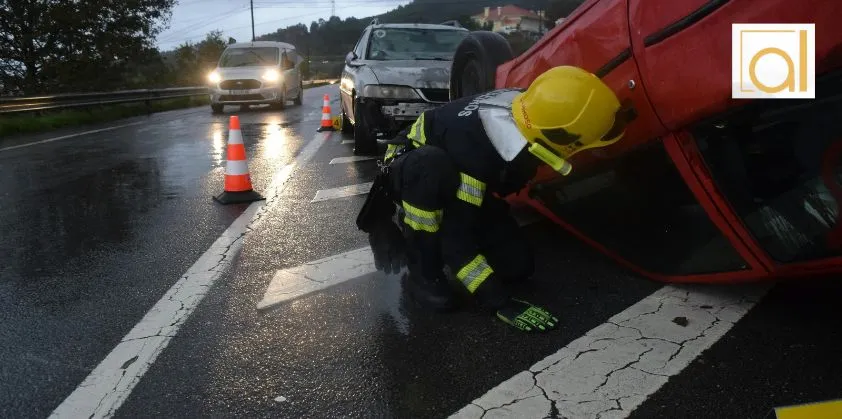

Multi-vehicle pile-ups can happen on the Parkway East and Parkway West, and drivers caught in them face a specific problem: figuring out who actually owes them money.
Who’s liable in a highway pile-up depends on how the crash unfolded, not just which car you hit or which car hit you. Pennsylvania law lets fault get split among more than one driver, and the percentage each one carries changes what you can collect.
A personal injury attorney en Ainsman Levine, LLC can help sort out that sequence before an insurance adjuster decides it for you.
Who Gets Blamed When Several Cars Collide on the Parkways?
A six-car pile-up rarely has one villain. Investigators typically separate a chain-reaction crash into a sequence of impacts, looking at which vehicle struck which and in what order, before anyone gets blamed.
When traffic backs up fast near the Squirrel Hill Tunnel or across the Fort Pitt Bridge, the driver who caused the first impact isn’t always the one who caused the worst injury. A car that rear-ends a stopped vehicle, then gets rear-ended itself seconds later, may share blame with the driver behind it.
Pennsylvania’s Fair Share Act and Multiple Drivers at Fault
When more than one driver is found liable, each one generally owes damages in proportion to their own share of the total fault, rather than an equal split among everyone involved. This rule, known as the Fair Share Act, changed how Pennsylvania courts divide blame in crashes with several defendants. There’s a major exception.
A driver found responsible for 60% or more of the total fault can still be held liable for the entire judgment, not just their percentage.
Say one driver in a five-car pile-up carried 60% or more of the fault through excessive speed or a reckless lane change. You may be able to collect your full award from that driver alone, even if two or three other cars share smaller portions of the blame. That threshold matters because it decides whether you chase one insurance policy or several at once.
What Happens If You Share Some of the Blame?
Multi-vehicle crashes rarely leave every driver blameless, and Pennsylvania’s comparative negligence rule accounts for that. If you’re found 51% or more at fault, you’re barred from recovering anything, but at 50% or less, your damages are simply reduced by your share of the blame. Here’s how that plays out with a hypothetical $100,000 claim:
- 20% at fault: you collect $80,000.
- 50% at fault: you collect $50,000.
- 51% at fault: you collect nothing. That one-point swing between 50% and 51% is one reason insurers may dispute fault percentages after a pile-up, and why it can help to have someone pushing back on their numbers.
What Causes Chain-Reaction Crashes on the Parkway West?
A driver isn’t allowed to follow another vehicle more closely than is reasonable given the speed of traffic and road conditions. A violation of this following-distance rule often becomes central evidence in sorting out which driver in the chain bears the most responsibility.
Weather, work zones, and heavy commuter volume on the Parkway West near Green Tree can add their own layer of risk on top of that.
When a PennDOT Truck or Commercial Vehicle Starts the Chain?
Sovereign immunity doesn’t automatically protect the state when a Commonwealth vehicle, like a PennDOT plow or maintenance truck, causes or contributes to a pile-up. Pennsylvania law specifically allows claims against the Commonwealth for injuries caused by the operation of a motor vehicle in a state employee’s possession or control. Damages in these claims are capped at $250,000 per person.
That exception matters on the Parkway East and West, where PennDOT crews may work alongside live traffic. A highway pile-up attorney can tell you early on whether a government vehicle belongs in the mix of defendants. Claims against the state usually need written notice within six months, not two years.
Richard C. Levine, a partner at the firm, has handled injury claims in Pennsylvania’s state and federal courts since 1982.
Building Proof After the Dust Settles
Evidence disappears fast after a multi-car crash, and a pile-up claim needs more of it than a simple two-car accident. The most useful sources usually include:
- Event data recorder information showing speed and braking in the seconds before impact.
- Dashcam and nearby security camera footage, which can show the full sequence of collisions.
- Official crash reports filed through PennDOT’s crash reporting system.
None of that evidence stays around indefinitely, so locking it down quickly after a crash on I-376 or either parkway can make a real difference in how a multi-vehicle attorney builds your case later.
Nosotros luchamos... para que tú no tengas que hacerlo
Décadas de experiencia en los tribunales. Miles de clientes atendidos.
How Long You Have to Take Action?
Pennsylvania generally requires an injury lawsuit to be filed within two years of the crash. That two-year deadline applies whether one other car hit you or five.
Toma contacto Nosotros nos encargamos del resto
Hablemos de tu situación y planifiquemos los próximos pasos.
Preguntas frecuentes
What should I do at the scene of a multi-vehicle pile-up on I-376?
Move to safety if you’re able, call 911, and take photos of every vehicle involved, not just the ones touching yours. Note the position of each car relative to the others, since that detail often gets lost once vehicles are towed away. A written account from you, made the same day, tends to hold up better than a memory formed weeks later.
Can I still file a claim if the police report blames me first?
Yes. A police report reflects one officer’s read of the scene, not a final legal finding of fault, and it can be challenged with crash reconstruction, camera footage, or witness statements. Some multi-vehicle claims end up with a different fault split once all the evidence is gathered.
What if one of the drivers in the pile-up doesn’t have insurance?
Pennsylvania drivers who carry uninsured or underinsured motorist coverage can turn to it when a driver in the chain has no policy or not enough coverage to pay their share. This type of coverage can make a difference in how much a pile-up victim recovers. Reviewing your own policy early helps identify whether this coverage applies to your situation.
Ainsman Levine, LLC: Your Pittsburgh Personal Injury Law Firm
Figuring out who owes what after a five-car pile-up shouldn’t fall on you while you’re still recovering.
Attorney Levine has taught trial advocacy at the University of Pittsburgh School of Law since 2011 and has led seminars on uninsured and underinsured motorist law since 2001. That experience matters when one driver in a multi-car crash has no coverage at all.
Cómo puede ayudarle Ainsman Levine, LLC
If you are dealing with a personal injury matter in PA, acting early can protect your options. Contáctenos hoy mismo to talk through your situation.


 EN